

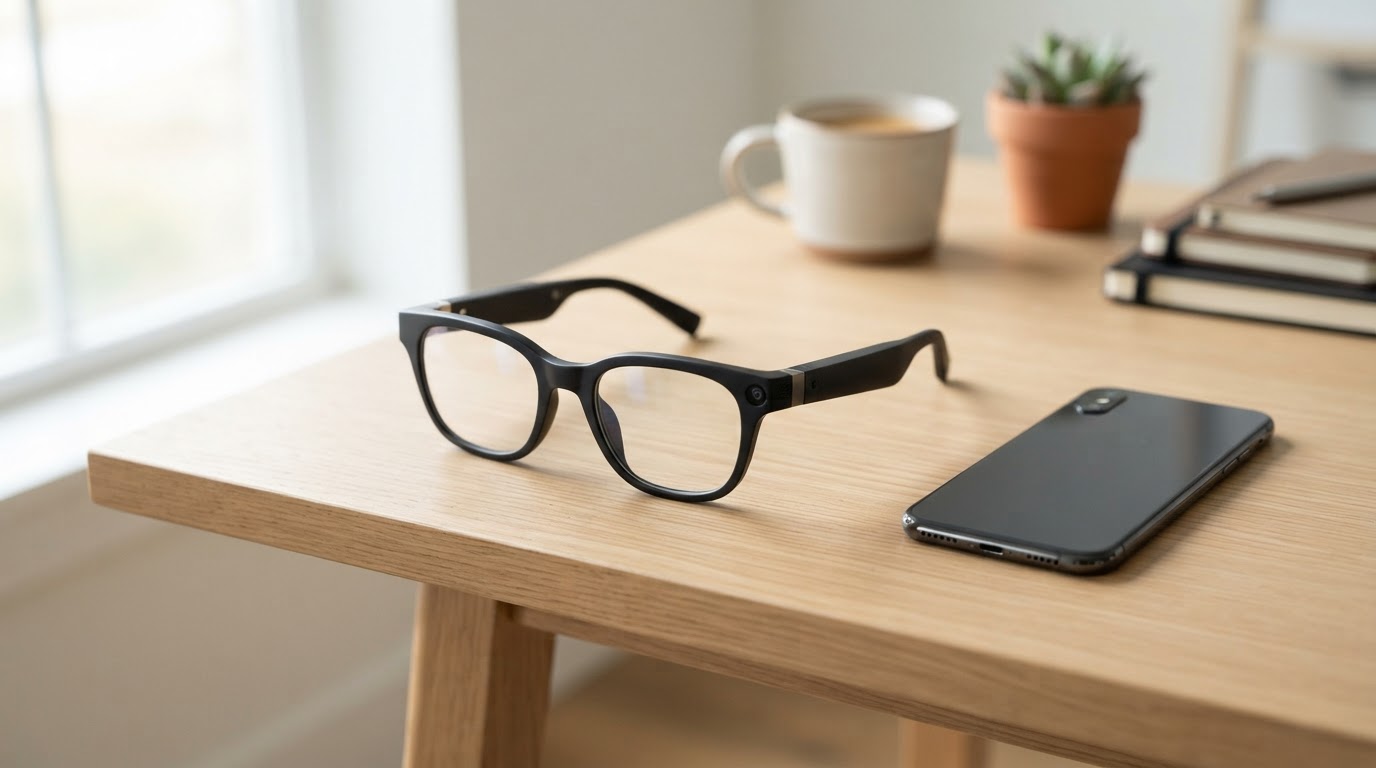
Samsung is getting ready to enter the smart-glasses market with a product that puts Google’s Gemini assistant directly into a pair of everyday frames. The company has confirmed a December 10 launch for its new intelligent eyewear in the United States and South Korea, with pre-orders already open. Instead of making the glasses look like a bulky technology prototype, Samsung is working with Gentle Monster and Warby Parker on a collection of 30 designs intended to look like normal eyewear.
The idea is simple: give people access to useful AI features without asking them to take out a phone. Users can ask Gemini about something they are looking at, translate information, get directions or turn a meeting whiteboard into notes. That could make smart glasses more practical than earlier devices that focused mainly on taking photos or recording short videos. The challenge will be making those features reliable, comfortable and socially acceptable in everyday situations. Google is bringing Gemini into more everyday devices too, including the Googlebook laptop concept built around Android and Gemini.
A wide choice of frames rather than one technology look
Samsung says the launch collection includes 30 variations from Gentle Monster and Warby Parker. Gentle Monster contributes a more fashion-forward range, while Warby Parker offers familiar everyday shapes. The combined lineup includes different frame styles, colors, sizes and lens treatments, giving buyers more choice than a single one-size-fits-all design. Samsung says the glasses weigh around 41 grams, although the exact weight varies by frame and lens configuration.
That weight is important because smart glasses need to be comfortable for hours, not just for a quick demonstration. Cameras, microphones, wireless radios and batteries all have to fit into a small frame without making it feel unbalanced. Samsung says the design aims to preserve comfort and durability while keeping the electronics discreet. Buyers will still need to try the glasses on, because a frame that looks good in a product photo may not fit every face or prescription.
Gemini can understand what the wearer is looking at
The main feature is hands-free access to Gemini. A wearer can ask about a landmark, object or scene and continue with follow-up questions, much as they would in a voice conversation with a phone. Samsung also describes productivity features: a user could photograph a meeting whiteboard, ask Gemini to summarize the main points and save the result to Samsung Notes. The glasses are intended to turn what someone sees into information they can use without interrupting the moment. Gemini already has useful phone-based features too; for example, see our guide to asking Gemini to remember where you left something.
Translation and navigation are another part of the pitch. Samsung says users will be able to translate a restaurant menu or follow turn-by-turn directions from Google Maps. The glasses can also prioritize and summarize notifications, read important updates aloud and let the wearer respond by voice. These functions depend on software, supported languages and market availability, so the experience may differ between countries. Samsung’s official announcement outlines the planned features and restrictions.
Privacy matters more when a camera is on your face
Smart glasses raise a different privacy question from a phone camera. People nearby may not know whether the wearer is taking a picture or asking an AI assistant about the scene. Samsung says the glasses include visible controls and privacy protections, and that visuals collected by Gemini are not used for AI model training or ad targeting. It also says the system is designed to redact bystanders’ faces automatically when a user asks Gemini about what they are seeing.
Those safeguards are useful, but they do not remove every concern. Local laws and social expectations around recording still apply, and the device is designed for adults aged 18 and over, with age verification required for activation and app downloads. The glasses also need clear indicators so people around the wearer can understand when recording or live visual assistance is active. Google’s privacy policy provides broader context on how Google handles account and service data.
Price, availability and what buyers should wait to learn
In the United States, Warby Parker’s version starts at $395, while Gentle Monster models range from $449 to $489. The launch date is December 10, with pre-orders beginning November 12. Both collections are coming to the US, while Gentle Monster’s eyewear will also be available in South Korea. Samsung has not announced a broad European launch, so buyers elsewhere should not assume that the first wave will be sold locally.
Samsung’s glasses could be one of the more interesting consumer AI products of the holiday season, but the first generation will need to prove itself outside a controlled demo. Battery life, microphone quality, comfort, prescription support and the usefulness of Gemini while walking around will matter more than a long list of features. The Samsung US launch details are a good starting point, but prospective buyers should wait for hands-on tests before deciding whether smart glasses are ready to become an everyday accessory.