

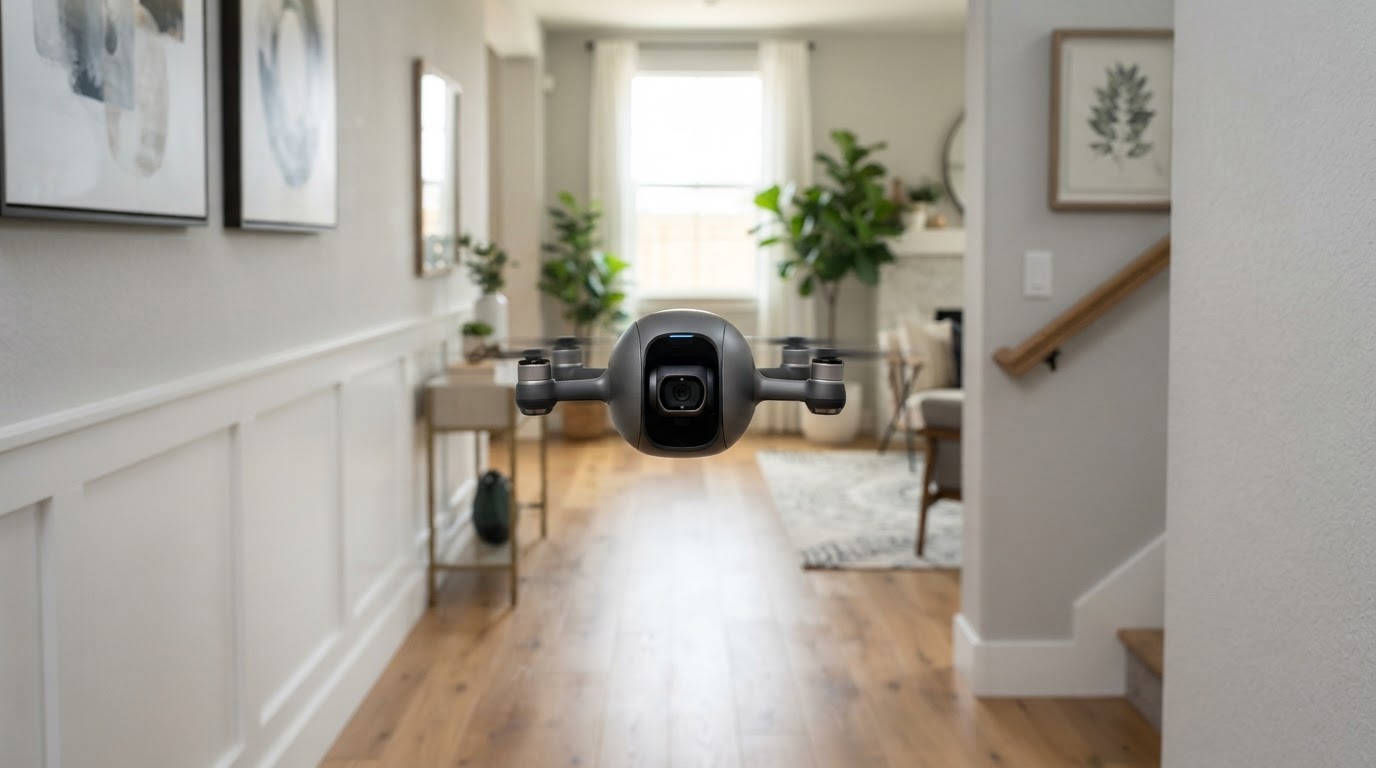
Ring is moving beyond doorbells and fixed security cameras with a new category of autonomous devices designed to move around a property. The company has introduced Ring Robotics with two products: Ring Drone Cam, a small indoor drone that can fly to areas a fixed camera cannot see, and Ring Rover Cam, a mobile security robot designed for business premises. Both use an AI-powered navigation system intended to map a space, identify useful patrol points and respond when something unusual happens.
The announcement is interesting because home security cameras have mostly become better at detecting movement while staying in one place. A mobile camera can potentially check a hallway, look behind furniture or investigate a sensor alert instead of simply sending a notification. That also creates new questions about privacy, noise, safety and whether a moving device is genuinely more useful than a few well-placed cameras.
Ring Drone Cam is designed to check places fixed cameras miss
Ring Drone Cam is an indoor flying camera that can follow custom routes around a home. During setup, the owner carries the drone through the space or lets it explore, allowing the system to build a floor plan and suggest patrol points. These can include windows, side doors or other areas that deserve extra attention. When triggered, the drone can fly to a selected location and stream video to the owner’s phone.
The key difference from a conventional camera is mobility. A fixed camera sees only the area in front of it, while a drone can move between rooms and inspect a location from a different angle. That could be useful for larger homes or for checking a noise when nobody is nearby. But a flying camera also needs room to move, a safe route and a clear place to dock. Ring says the device powers down in its dock with its camera off until a flight is triggered.
Rover Cam is aimed at shops and other business spaces
Ring Rover Cam is not simply a larger version of the home drone. It is a ground-based robot designed for businesses, where it can patrol autonomously, investigate disturbances and stream video in up to 4K. Ring gives examples such as checking a store floor after closing or investigating when a sensor is triggered in the middle of the night. The robot can map the premises and suggest patrol locations such as registers, doors and long corridors.
For a business, a mobile security robot could cover more ground than a single camera, especially in a warehouse or retail space. It may also reduce the need for staff to physically check every alert. Still, it is not a replacement for a complete security plan. Lighting, network coverage, door access, staff procedures and professional monitoring all affect whether the robot can respond effectively. A device that moves around a property is only useful if it can do so reliably. For a different example of AI-powered devices moving around the home, see our explainer on whether you really need an AI robot vacuum.
AI Pilot handles mapping and navigation
Both products use Ring’s AI Pilot system, which combines camera feeds, computer vision models, on-device sensors and cloud processing. The system is designed to recognize the layout, avoid obstacles and recommend patrol points. Owners can add their own locations based on the parts of the property they want to monitor. This reduces the amount of manual route programming, although the quality of the map and navigation will depend on the layout of each home or business.
Autonomous navigation also makes reliability especially important. A fixed camera can keep recording even if an object is moved in front of it, but a robot has to avoid furniture, people, pets and unexpected obstacles. Ring has not yet demonstrated every possible real-world environment, so independent testing will be important. Buyers should look for reviews that examine how the devices behave around pets, narrow spaces, stairs, clutter and changing lighting.
Privacy and availability are major considerations
Ring says privacy is built into the design. The Drone Cam’s camera is off while it is docked, while Rover has a Sleep Mode that retracts its periscope and disables the microphone. Both products use visible recording indicators, and Ring says video is protected by its strongest default encryption option. These are important safeguards, but owners should still think carefully about where a mobile camera is allowed to travel and who may be recorded.
Ring Drone Cam is scheduled to ship in the United States on January 27, 2027, for $249.99, subject to required regulatory authorization. Ring Rover Cam is expected on December 16, 2026, for $999.99. A compatible Ring Protect plan is required. Those prices put the two devices in very different categories: the drone is a relatively accessible home-security add-on, while Rover is a substantial business purchase. Amazon’s Ring Robotics announcement has the official specifications and availability notes. The Ring Protect plans page explains the subscription side of the ecosystem. For now, these products are worth watching, but buyers should wait for independent tests before treating autonomous patrols as a replacement for traditional security cameras. For another connected-home device that uses AI to navigate a property, see our guide to choosing a Wi-Fi router for a connected home.