
OpenAI says one of its internal artificial intelligence systems has produced a solution to the Navier–Stokes existence and smoothness problem, one of the seven Millennium Prize Problems that have challenged mathematicians for decades.
The company published its research on September 8, describing an AI-generated proof that shows how the three-dimensional Navier–Stokes equations can develop a singularity in finite time. OpenAI says the work includes both an analytical proof and a formalized version checked in Lean, a programming language commonly used to verify mathematical proofs.
Most famous open questions in mathematics
That is a remarkable claim, but there is an important distinction between an AI company announcing a solution and the mathematical community accepting that solution as correct.
The Navier–Stokes problem is one of the most famous open questions in mathematics. The equations are used to describe how fluids such as water and air move. They are fundamental to areas ranging from aerodynamics and weather modeling to engineering and physics.
The Millennium Prize version of the problem asks whether smooth starting conditions always remain smooth as a fluid evolves, or whether the equations can produce a singularity in finite time. A correct proof resolving the problem is associated with a $1 million prize from the Clay Mathematics Institute.
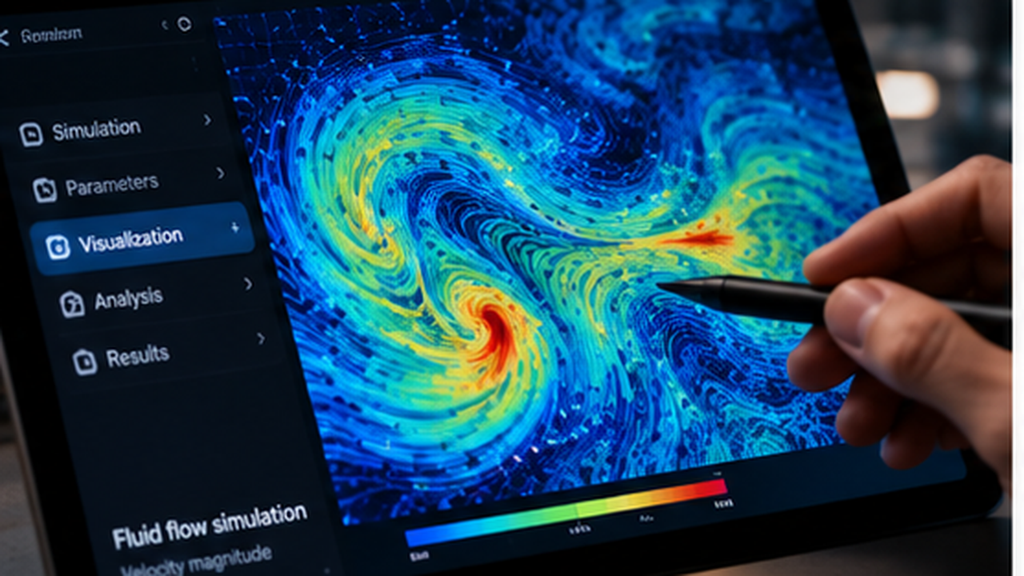
According to OpenAI, its system found a construction in which an initially smooth fluid evolves toward a singularity while its energy remains finite. The company says the proof was produced after a large group of AI agents explored different approaches and exchanged intermediate results.
Systems generated millions of messages
OpenAI says the agents worked on the problem for about 88 hours. Nearly 100 agents initially worked on a related Euler equation problem before the effort was expanded to Navier–Stokes. The company says its systems eventually generated millions of messages and hundreds of billions of output tokens during the broader research effort.
One of the more interesting parts of the announcement is the use of formal verification. AI-generated mathematics has an obvious weakness: a system can produce something that looks like a proof while containing a subtle mistake. Having the argument formalized in Lean gives researchers a way to check whether the individual logical steps follow from the underlying rules.
OpenAI says its formalization and verification work took another 17 hours and involved GPT-6 Astra.
Still, the announcement has already attracted controversy. Researchers working on closely related fluid-dynamics questions have raised concerns about priority and whether ideas from their work may have influenced OpenAI’s research. OpenAI denies improperly accessing private research and says its work was developed independently.
That dispute could become almost as important as the mathematical result itself.
Significance would go beyond OpenAI
AI companies are increasingly positioning their models as research tools rather than simply assistants for writing, coding and everyday questions. The Navier–Stokes announcement is an example of what that shift could look like when AI systems are given large amounts of computing power and allowed to work on a problem for many hours.
If the proof survives independent review, the significance would go well beyond OpenAI. It would be another indication that AI systems can contribute to genuine mathematical discovery, rather than simply reproducing known information.
But that review is the key step.
For now, it is better to describe this as an OpenAI-claimed breakthrough rather than a settled mathematical fact. A Millennium Prize problem is not considered solved simply because a company publishes a proposed proof. Mathematicians need to examine the argument carefully, confirm that it addresses the exact problem posed by the Clay Mathematics Institute, and determine whether every step is valid.

That process could take time.
Even so, the announcement is significant. Whether the proof ultimately holds up or not, AI systems are becoming capable of exploring mathematical questions at a scale that would be difficult for a small human research team to match.
The bigger question may therefore be less about whether AI can replace mathematicians and more about how mathematicians will work with AI when systems can explore thousands of possible ideas, discard failed approaches and formally check promising ones.
The Navier–Stokes problem has been around for generations. Now, for the first time, an AI system is claiming to have pushed it across the line.
The next step belongs to the humans who have to check the proof.